.png)




Las matemáticas que tu banco no quiere que entiendas

The Math Your Bank Doesn't Want You to Understand
Por Yoel Sardiñas
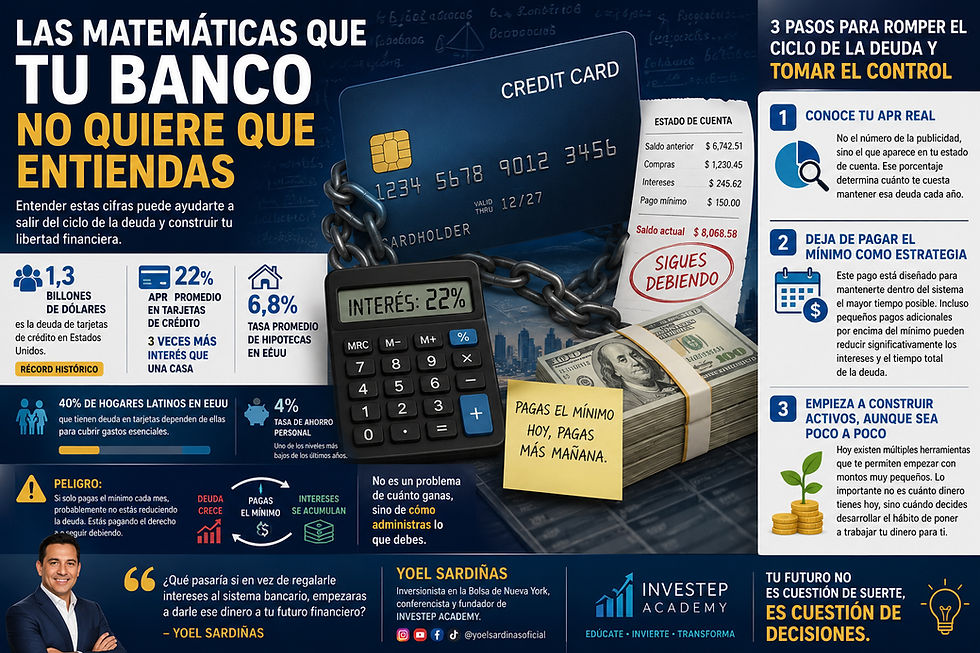
Hay un número que tu banco nunca va a mostrarte en letras grandes: 1,3 billones de dólares. Eso es lo que deben hoy los consumidores en Estados Unidos solo en tarjetas de crédito. Un récord histórico.
There is one number your bank will never display in large letters: $1.3 trillion. That is how much American consumers currently owe in credit card debt alone. A historic record.
matemáticas
Y lo más inquietante no es el tamaño de la cifra; es que la mayoría de quienes contribuyen a ella no saben exactamente cómo llegaron ahí.
What is most concerning is not the size of the number, but that most people contributing to it do not fully understand how they got there.
Permíteme explicarte la matemática que nadie te enseñó: la tasa de interés promedio en tarjetas de crédito en Estados Unidos ronda hoy el 22% anual.
Let me explain the math no one taught you: the average credit card interest rate in the United States is currently around 22% annually.
Para ponerlo en contexto: una hipoteca promedio en este mismo país está cerca del 6.8%.
To put that into perspective, the average mortgage rate in the same country is approximately 6.8%.

Es decir, tu tarjeta puede llegar a cobrarte tres veces más interés que una casa.
In other words, your credit card may charge you three times more interest than your home loan.
Esa tasa tiene un nombre técnico: APR (Annual Percentage Rate) o tasa porcentual anual.
That rate has a technical name: APR (Annual Percentage Rate).
En términos simples, es el precio que pagas por deber dinero.
Simply put, it is the price you pay for borrowing money.
Y aquí aparece la parte más peligrosa: si solo pagas el mínimo cada mes, probablemente no estás reduciendo la deuda.
And here comes the most dangerous part: if you only make the minimum payment each month, you are probably not reducing your debt.
Estás pagando el derecho a seguir debiendo.
You are paying for the privilege of staying in debt.
De hecho, hoy cerca del 40% de los hogares latinos en Estados Unidos que tienen deuda en tarjetas dependen de ellas para cubrir gastos esenciales.
In fact, nearly 40% of Latino households in the United States with credit card debt rely on those cards to cover essential expenses.
La tarjeta de crédito se convirtió en el colchón financiero que antes representaban los ahorros.
Credit cards have become the financial cushion that savings accounts once represented.
Y mientras eso ocurre, la tasa de ahorro personal cayó cerca del 4%, uno de los niveles más bajos de los últimos años.
Meanwhile, the personal savings rate has fallen to around 4%, one of the lowest levels in recent years.
El problema es que la deuda rara vez llega de golpe.
The problem is that debt rarely appears overnight.
Normalmente empieza con pequeñas decisiones que parecen inofensivas.
It usually begins with small decisions that seem harmless.
Y ahí aparece una de las preguntas financieras más importantes:
And that leads to one of the most important financial questions:
¿Qué pasaría si en vez de regalarle intereses al sistema bancario, empezaras a darle ese

dinero a tu futuro financiero?
What would happen if, instead of giving interest payments to the banking system, you started giving that money to your financial future?
En un mundo donde la inflación reduce el valor del dinero y los intereses trabajan constantemente en contra de quienes viven endeudados, aprender a invertir deja de ser un lujo financiero y comienza a convertirse en una necesidad.
In a world where inflation reduces the value of money and interest constantly works against those carrying debt, learning how to invest is no longer a luxury—it is becoming a necessity.
Por eso, aquí hay tres pasos simples que pueden ayudarte a romper el ciclo de la deuda y recuperar el control de tu dinero:
That is why here are three simple steps that can help you break the debt cycle and regain control of your finances:
1. Conoce tu APR real.
1. Know your actual APR.
No el número de la publicidad, sino el que aparece en tu estado de cuenta.
Not the number shown in advertisements, but the one listed on your statement.
Ese porcentaje determina cuánto te cuesta mantener esa deuda cada año.
That percentage determines how much it costs you to carry that debt each year.
2. Deja de pagar el mínimo como estrategia.
2. Stop relying on minimum payments.
Este pago está diseñado para mantenerte dentro del sistema el mayor tiempo posible.
This payment structure is designed to keep you in debt for as long as possible.
Incluso pequeños pagos adicionales por encima del mínimo pueden reducir significativamente los intereses y el tiempo total de la deuda.
Even small payments above the minimum can dramatically reduce interest costs and shorten the life of your debt.
3. Empieza a construir activos, aunque sea poco a poco.
3. Start building assets, even slowly.
Uno de los mitos más peligrosos sobre las inversiones es creer que necesitas miles de dólares para comenzar.
One of the most dangerous myths about investing is believing you need thousands of dollars to get started.
La realidad es que hoy existen múltiples herramientas que te permiten empezar con montos muy pequeños.
The reality is that today there are many tools that allow you to begin investing with very small amounts.
Lo importante no es cuánto dinero tienes hoy, sino cuándo decides desarrollar el hábito de poner a trabajar tu dinero para ti.
What matters most is not how much money you have today, but when you decide to develop the habit of making your money work for you.
Yoel Sardiñas es inversionista en la Bolsa de Nueva York, conferencista y fundador de Investep Academy.
Yoel Sardiñas is a New York Stock Exchange investor, speaker, and founder of Investep Academy.


Comments