




Mussels regresan al río Mississippi tras décadas de desaparición

Mussels return to the Mississippi River after decades of absence
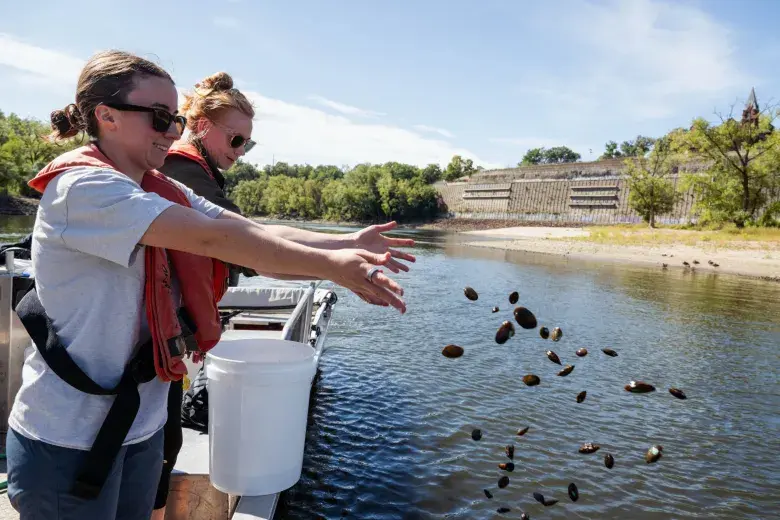
Después de décadas de disminución, las poblaciones de mejillones de agua dulce están comenzando a recuperarse en una sección del río Mississippi entre Minneapolis y St. Paul, Minnesota. El avance es resultado de un proyecto de conservación que lleva 25 años reintroduciendo especies nativas amenazadas y en peligro de extinción.
After decades of decline, freshwater mussel populations are beginning to recover in a section of the Mississippi River between Minneapolis and St. Paul, Minnesota. This progress is the result of a 25-year conservation project focused on reintroducing native species that are threatened or endangered.
Desde 2001, especialistas del Departamento de Recursos Naturales de Minnesota han trabajado para devolver estos animales al río. Durante ese tiempo, han introducido aproximadamente 45,000 mejillones de especies como mucket, Higgins eye, snuffbox y winged mapleleaf en un tramo de aproximadamente media milla que anteriormente no tenía poblaciones de estos organismos.
Since 2001, specialists from the Minnesota Department of Natural Resources have worked to bring these animals back to the river. During that time, they have introduced approximately 45,000 mussels from species such as mucket, Higgins eye, snuffbox and winged mapleleaf into a stretch of about half a mile that previously had no mussel populations.
El proyecto más reciente incluyó la liberación de alrededor de 400 ejemplares jóvenes de mucket y Higgins eye. Estos mejillones fueron criados durante aproximadamente cinco años en un laboratorio del departamento en Lake City, Minnesota. Aunque todavía son pequeños, ambas especies pueden vivir hasta 50 años.
The most recent project involved releasing around 400 young mucket and Higgins eye mussels. They were raised for approximately five years at the department's laboratory in Lake City, Minnesota. Although they are still small, both species can live for up to 50 years.
Los mejillones de agua dulce cumplen una función importante en los ecosistemas acuáticos. Ayudan a filtrar el agua y pueden eliminar bacterias, algas y metales del ambiente. Además, cuando se agrupan en el fondo de los ríos, sus bancos pueden reducir la erosión y ofrecer refugio a otros animales acuáticos.
Freshwater mussels play an important role in aquatic ecosystems. They help filter water and can remove bacteria, algae and metals from the environment. When they gather on riverbeds, their mussel beds can also reduce erosion and provide habitat for other aquatic animals.
Sin embargo, estas especies han enfrentado amenazas durante más de un siglo. La sobreexplotación para fabricar botones de nácar, la contaminación industrial, la construcción de esclusas y represas y la expansión de los mejillones cebra invasores han contribuido a su disminución. De las 51 especies nativas de Minnesota, más de la mitad están clasificadas como amenazadas, en peligro o de especial preocupación. Cinco se consideran probablemente extintas.
However, these species have faced threats for more than a century. Overharvesting for pearl button production, industrial pollution, the construction of locks and dams, and the spread of invasive zebra mussels have contributed to their decline. Of Minnesota's 51 native species, more than half are listed as endangered, threatened or species of special concern. Five are considered presumed extinct.
Los científicos también han encontrado señales alentadoras. En los lugares donde se han realizado otros proyectos de reintroducción en Minnesota, entre el 40% y el 80% de los mejillones liberados sobreviven cada año. En el río Mississippi, los investigadores han encontrado ejemplares pequeños sin etiquetas, lo que podría indicar que los mejillones reintroducidos ya están reproduciéndose.
Scientists have also found encouraging signs. At other mussel reintroduction sites in Minnesota, between 40% and 80% of the released mussels survive each year. In the Mississippi River, researchers have found small mussels without tags, which could indicate that the reintroduced mussels are already reproducing.
Ante estos resultados, los especialistas consideran que la población está comenzando a establecerse por sí misma y planean permitir que el proceso natural continúe por un tiempo. Aunque la recuperación todavía requiere seguimiento, el proyecto demuestra cómo los esfuerzos de conservación a largo plazo pueden ayudar a restaurar la vida en uno de los ríos más importantes de Estados Unidos.
With these results, specialists believe the population is beginning to establish itself and plan to let the natural process continue for a while. Although recovery still requires monitoring, the project shows how long-term conservation efforts can help restore wildlife in one of the most important rivers in the United States.


Comments