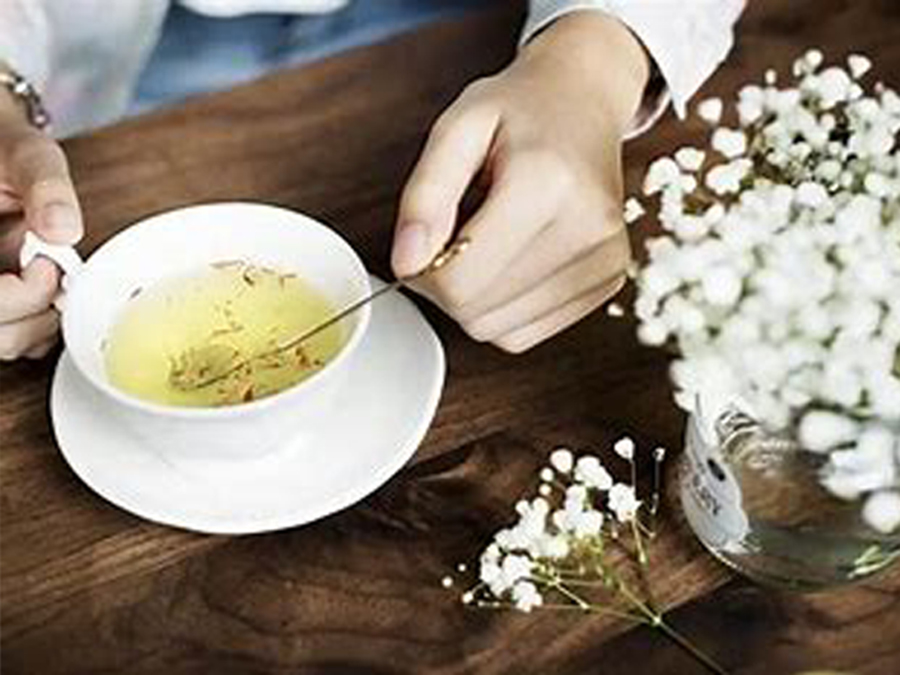
El consumo de té se ha extendido alrededor del mundo, convirtiéndose en una de las bebidas más populares. El té blanco o Camellia sinensis, aunque no es el más conocido, si es uno de los más naturales y fuente de antioxidantes.La elaboración del té blanco es sencilla y se obtiene una bebida con un tono fresco con importantes aportes de antioxidantes, micronutrientes, polifenoles y biocompuestos que benefician al organismo. Tea consumption has spread around the world, becoming one of the most popular drinks. White tea or Camellia sinensis, although not the best known, is one of the most natural and a source of antioxidants.The preparation of white tea is simple and you obtain a drink with a fresh tone with important contributions of antioxidants, micronutrients, polyphenols and biocompounds that benefit the body.
El té blanco se produce a partir de las hojas y los brotes de la planta de té que son retirados cuando la planta es joven, por eso tiene una gran cantidad de propiedades como el té verde y el té negro.Las investigaciones revelan que el té blanco tiene propiedades antiinflamatorias, estimulantes, antidepresivas, antiaterogénica, antihipertensiva, antimutagénica, antimicrobianas, anticancerígenas, hipolipemiantes, neuroprotectoras y antidiabéticas.
White tea is produced from the leaves and buds of the tea plant that are removed when the plant is young, which is why it has a large number of properties like green tea and black tea.Research reveals that white tea has anti-inflammatory, stimulant, antidepressant, antiatherogenic, antihypertensive, antimutagenic, antimicrobial, anticancer, lipid-lowering, neuroprotective, and antidiabetic properties
Por la combinación de compuestos y nutrientes se relaciona el consumo de té blanco con la prevención de problemas cardiovasculares. Además del aumento de las defensas que contribuye a mejorar el sistema inmune y tiene un efecto protector de la piel que previene las arrugas, ayuda a recuperar de las quemaduras solares y los daños de los rayos UV en la piel.Otra de las formas de consumir té blanco es en cápsulas de venta es farmacias y establecimientos especializados en medicina naturopática.Efectos para el cuidado de la piel: un estudio con animales publicado por el National Library of Medicine (NLM) revela que el té blanco por sus propiedades antiinflamatorias y antioxidantes genera un efecto protector “contra las arrugas, las quemaduras solares y los daños de los rayos UV en la piel”.
Due to the combination of compounds and nutrients, the consumption of white tea is related to the prevention of cardiovascular problems. In addition to increasing defenses, it contributes to improving the immune system and has a protective effect on the skin that prevents wrinkles, and helps recover from sunburn and UV ray damage to the skin.Another way to consume white tea is in capsules sold in pharmacies and establishments specialized in naturopathic medicine.Skin care effects: an animal study published by the National Library of Medicine (NLM) reveals that white tea, due to its anti-inflammatory and antioxidant properties, generates a protective effect “against wrinkles, sunburn and skin damage.” UV rays on the skin.
Ayuda a mejorar la salud cardiovascular: según pruebas realizada in vivo y vitro, el extracto de té blanco (WTE) tiene un efecto positivo en casos del síndrome metabólico, sobre todo en el mejoramiento del metabolismo anormal de los lípidos.La preparación del té banco es similar a la de los tés ya conocidos, solo se requiere 2 cucharadas de té rasas por cada taza de agua.Se lleva el agua a hervir y al comenzar a burbujear se apaga, se agrega el té, se tapa y se deja reposar durante 5 minutos, se cuela y está listo para disfrutar.Según las recomendaciones de los especialistas se debe consumir una cantidad de 1,5 a 2,5 g de esta hierba por día o unas 2 a 3 tazas de té diarios para bajar de peso preferiblemente sin azúcar o endulzante y 1 hora antes o después de la comida.
Helps improve cardiovascular health: according to tests carried out in vivo and vitro, white tea extract (WTE) has a positive effect in cases of metabolic syndrome, especially in improving abnormal lipid metabolism.The preparation of bench tea is similar to that of already known teas, only 2 level tablespoons of tea are required for each cup of water.Bring the water to a boil and when it begins to bubble, turn it off, add the tea, cover it and let it rest for 5 minutes, strain it and it is ready to enjoy.According to the recommendations of specialists, you should consume an amount of 1.5 to 2.5 g of this herb per day or about 2 to 3 cups of tea daily to lose weight, preferably without sugar or sweetener and 1 hour before or after food.
Fans