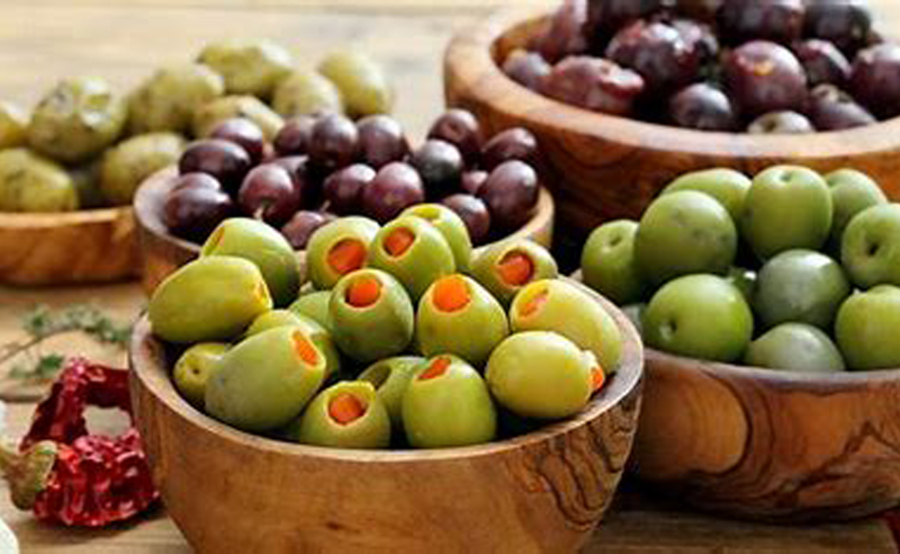
La aceituna es fruto del olivo, es pequeño con una parte carnosa exterior o piel que rodea una cáscara de semilla que ofrece diversos beneficios para la salud. Especialistas e investigadores asocian el consumo de aceitunas con el aumento del colesterol bueno, mejora la salud ocular, ayuda a regular el intestino, previene el envejecimiento prematuro y enfermedades del corazón.Este fruto tiene una forma ovoide, de color violeta negruzco cuando está maduro mide entre 1 a 2,5 cm de largo, mientras que en las plantas silvestres en los cultivados de huerto son de tamaño más pequeño.La aceituna es rica en nutrientes y compuestos fenólicos, especialmente secoiridoides e iridoides. También es rica en grasas saludables, fibras, luteína, betacaroteno y compuestos bioactivos con acción laxante, saciante, hipolipemiante y antioxidante.
The olive is the fruit of the olive tree, it is small with a fleshy outer part or skin that surrounds a seed shell that offers various health benefits. Specialists and researchers associate the consumption of olives with an increase in good cholesterol, improves eye health, helps regulate the intestine, prevents premature aging and heart disease.This fruit has an ovoid shape, blackish violet in color when ripe and measures between 1 to 2.5 cm long, while in wild plants in orchard crops they are smaller in size.The olive is rich in nutrients and phenolic compounds, especially secairidoids and iridoids. It is also rich in healthy fats, fiber, lutein, beta-carotene and bioactive compounds with laxative, satiating, lipid-lowering and antioxidant action.
Por su composición se le atribuyen capacidades de tratar diabetes, hipertensión, inflamación, diarrea, infecciones del tracto respiratorio y urinario, enfermedades estomacales e intestinales, asma, hemorroides, reumatismo, laxante, limpiador bucal y como vasodilatador, según un estudio.Las aceitunas han sido utilizadas en la medicina tradicional para reducir el azúcar en sangre, el colesterol y el ácido úrico.Se conocen 3 variedades de aceitunas que se diferencian por el tiempo de maduración: la verde, la rosa y la negra; siendo la verde es la más joven con un sabor más amargo y un mayor contenido de carotenoides que la rosa y la negra.
Due to its composition, it is attributed with the ability to treat diabetes, hypertension, inflammation, diarrhea, respiratory and urinary tract infections, stomach and intestinal diseases, asthma, hemorrhoids, rheumatism, as a laxative, mouth cleanser and as a vasodilator, according to a studyOlives have been used in traditional medicine to reduce blood sugar, cholesterol and uric acid.There are 3 varieties of olives that differ in their ripening time: green, pink and black; The green one is the youngest with a more bitter taste and a higher carotenoid content than the pink and black ones.
Aumentar el colesterol “bueno”: la aceituna puede ayudar a aumentar los niveles de colesterol “bueno” HDL en la sangre por ser ricas en de vitamina E, grasas monoinsaturadas y poliinsaturadas, y por la acción antioxidantes y antiinflamatorios.Mejorar la salud ocular: uno de los beneficios de las aceitunas es la capacidad de ayudar a mejorar la salud de los ojos por su alto contenido de carotenoides, en especial luteína y zeaxantina con propiedades antioxidantes, revela un trabajo publicado por la nutricionista Tatiana Zanin en Tua Saude. Esto ayuda proteger los ojos contra los daños causados por los rayos ultravioleta del sol y la luz azul emitida por computadoras y celulares.Regula las funciones del intestino: las aceitunas son fuente de fibras, lo que contribuye a aumentar el volumen de las heces, estimulando los movimientos intestinales naturales, regulando el intestino y evitando el estreñimiento.
Increase “good” cholesterol: olives can help increase levels of “good” HDL cholesterol in the blood because they are rich in vitamin E, monounsaturated and polyunsaturated fats, and due to their antioxidant and anti-inflammatory action.Improve eye health: one of the benefits of olives is the ability to help improve eye health due to their high content of carotenoids, especially lutein and zeaxanthin with antioxidant properties, reveals a work published by nutritionist Tatiana Zanin in Tua Saude. This helps protect your eyes from damage caused by the sun's ultraviolet rays and the blue light emitted by computers and cell phones.Regulates intestinal functions: olives are a source of fiber, which contributes to increasing the volume of stool, stimulating natural intestinal movements, regulating the intestine and avoiding constipation.
Previene el envejecimiento prematuro: Por contener compuestos bioactivos y nutrientes antioxidantes, como la vitamina E, luteína, zeaxantina y vitamina A, las aceitunas ayudan a combatir los radicales libres que causan el estrés oxidativo de las células que afecta la piel y aceleran el envejecimiento.Ayuda a prevenir enfermedades del corazón: los efectos antioxidantes de las aceitunas que vienen dadas por los flavonoides ayudan a mejorar la salud de las arterias y mejora la circulación sanguínea. Esto contribuye prevenir enfermedades cardiovasculares.Los especialistas recomiendan un consumo máximo de un puñado o 1/4 de taza al día, ya que cuando se consume en exceso puede ser perjudicial para la salud.No se recomienda para personas con problemas renales o presión arterial alta porque este pequeño fruto contiene altas cantidades de sodio, porque el fruto natural es muy amargo y difícil de consumir.
Prevents premature aging: By containing bioactive compounds and antioxidant nutrients, such as vitamin E, lutein, zeaxanthin and vitamin A, olives help fight free radicals that cause oxidative stress in cells that affects the skin and accelerate aging.Helps prevent heart disease: The antioxidant effects of olives that come from flavonoids help improve the health of the arteries and improve blood circulation. This helps prevent cardiovascular diseases.Specialists recommend a maximum consumption of a handful or 1/4 cup per day, since when consumed in excess it can be harmful to health.It is not recommended for people with kidney problems or high blood pressure because this small fruit contains high amounts of sodium, because the natural fruit is very bitter and difficult to consume.
Fans