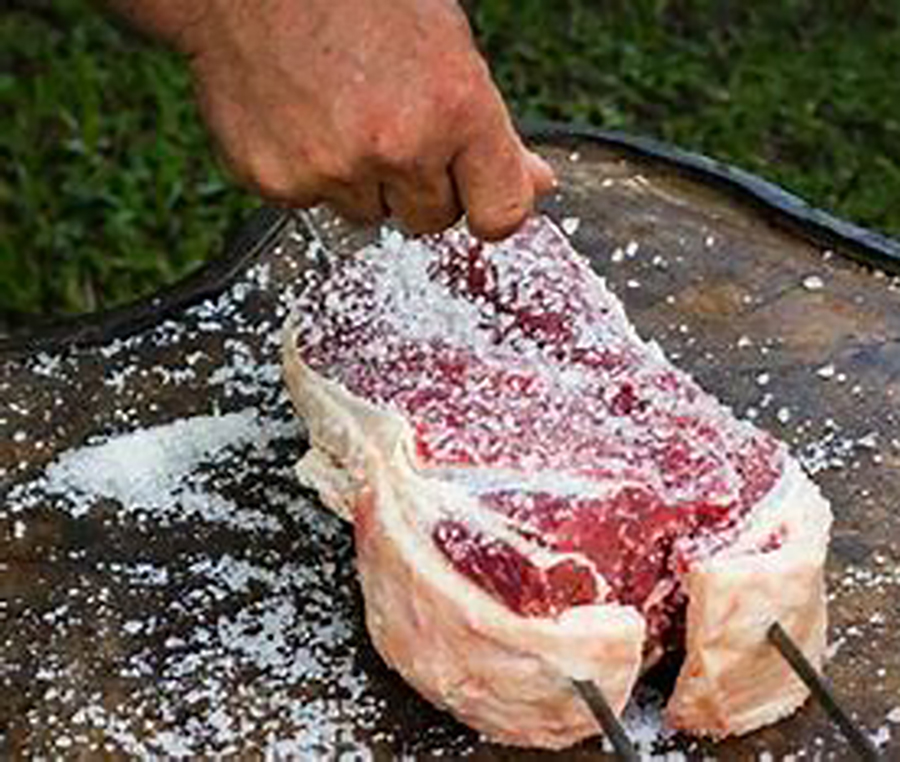
Learn how to use salt as a meat tenderizer
Los chefs emplean diversas técnicas para ablandar la carne, como golpearla con un martillo de cocina, marinarla con jugos de frutas y utilizar un ingrediente ancestral: la sal.
Chefs employ a variety of techniques to tenderize meat, including pounding it with a kitchen hammer, marinating it in fruit juices, and using an ancient ingredient: salt.
Desde tiempos antiguos en Mesopotamia, la sal se ha usado para ablandar la carne. Cuando la sal entra en contacto con las proteínas de la carne, extrae agua, que disuelve la sal antes de ser reabsorbida por la carne. Este proceso permite que el agua salada retenida mantenga más humedad durante la cocción, resultando en una carne más tierna y jugosa.
Since ancient times in Mesopotamia, salt has been used to tenderize meat. When salt comes into contact with meat proteins, it draws out water, which dissolves the salt before being reabsorbed by the meat. This process allows the retained salt water to hold more moisture during cooking, resulting in more tender, juicy meat.
La sal actúa rompiendo proteínas musculares fibrosas como actina, miosina y colágeno, funcionando como un “martillo químico” que ablanda la carne. Al cocinar, ya sea en horno, estufa, parrilla o olla de cocción lenta, la carne se encoge porque el agua se expulsa durante la cocción, y el colágeno se contrae con el calor, lo que seca la carne y la hace más dura, según Mashed.
Salt works by breaking down fibrous muscle proteins like actin, myosin, and collagen, functioning as a “chemical hammer” that tenderizes meat. When cooking, whether in the oven, stovetop, grill, or slow cooker, meat shrinks because water is expelled during cooking, and collagen contracts with heat, which dries out the meat and makes it tougher, according to Mashed.
La sal ayuda a desnaturalizar las fibras proteicas y evita que se contraigan tanto durante la cocción, permitiendo que la carne retenga más agua y tenga una textura y sabor más tiernos.
Salt helps denature protein fibers and prevents them from contracting as much during cooking, allowing the meat to retain more water and have a more tender texture and flavor.
El tipo de sal puede influir en el proceso de ablandamiento de la carne, dependiendo de si se usa en una salmuera seca o húmeda (solo sal o una mezcla de sal y agua). La sal marina gruesa o kosher, con sus grandes cristales, se puede esparcir fácilmente sobre la carne para una cobertura uniforme. Esta sal se adhiere bien a la carne.
The type of salt can influence the meat tenderizing process, depending on whether it is used in a dry or wet brine (salt only or a mixture of salt and water). Coarse or kosher sea salt, with its large crystals, can be easily spread over the meat for even coverage. This salt adheres well to the meat.
Por otro lado, para una salmuera húmeda, la sal de mesa más fina funciona mejor, ya que se disuelve rápidamente en el agua. En ambos casos, la sal pura es ideal porque el yodo que contiene también ayuda en el proceso de ablandamiento al ser reabsorbido por la carne.
On the other hand, for a wet brine, finer table salt works best, as it dissolves quickly in water. In both cases, pure salt is ideal because the iodine it contains also aids in the tenderizing process by being reabsorbed by the meat.
Otras técnicas para ablandar la carne incluyen la cocción lenta, el uso de objetos afilados, la aplicación de bicarbonato de sodio, el marinado con ciertas frutas y el “aterciopelado” en una mezcla de claras de huevo, maicena y aceite.

Other techniques for tenderizing meat include slow cooking, using sharp objects, applying baking soda, marinating with certain fruits, and “velvet-ing” in a mixture of egg whites, cornstarch, and oil.
Fans